
Major, Minor & Dominant 7th Chords
Goal
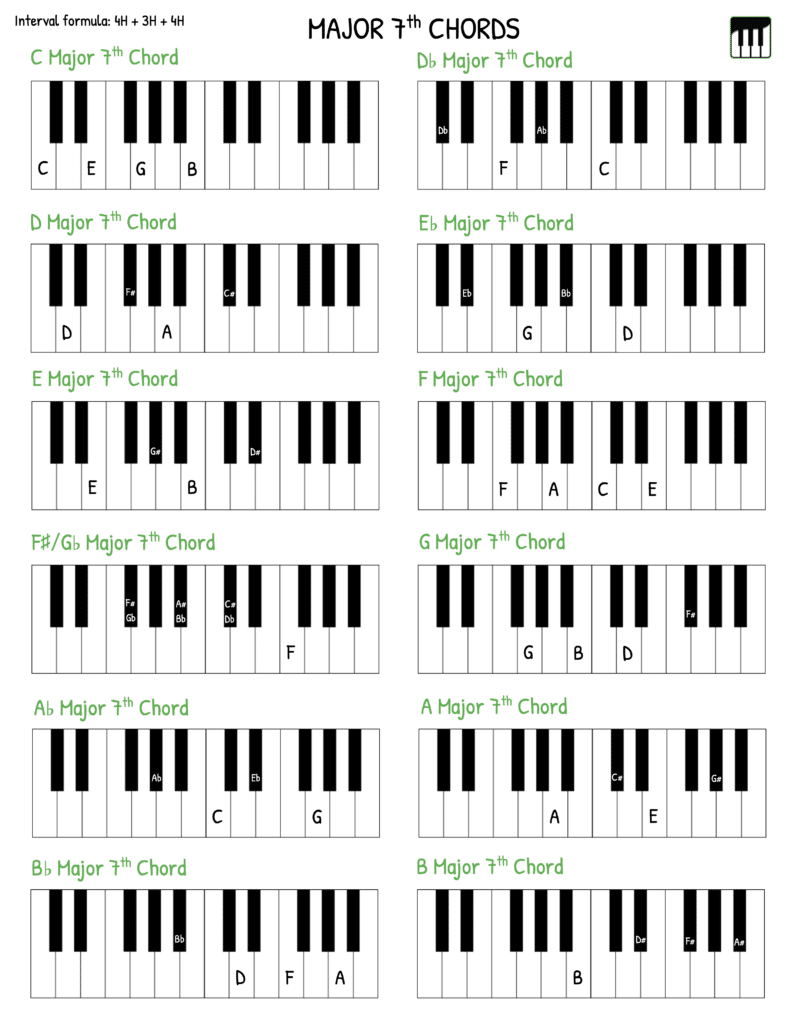
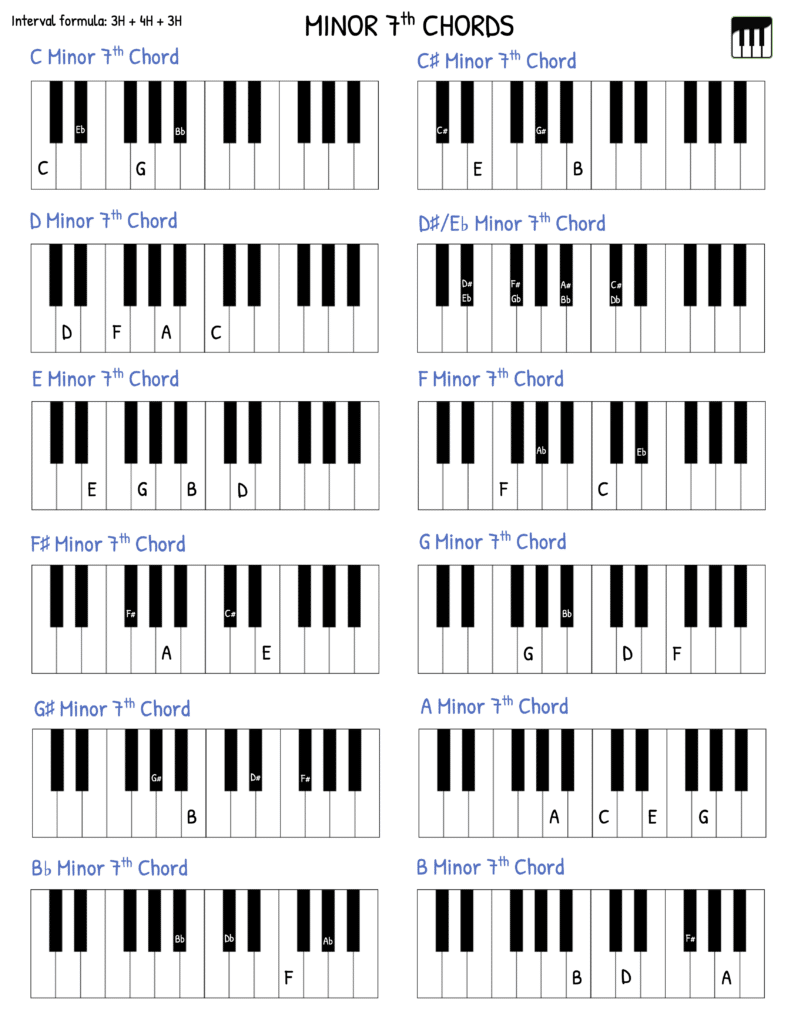
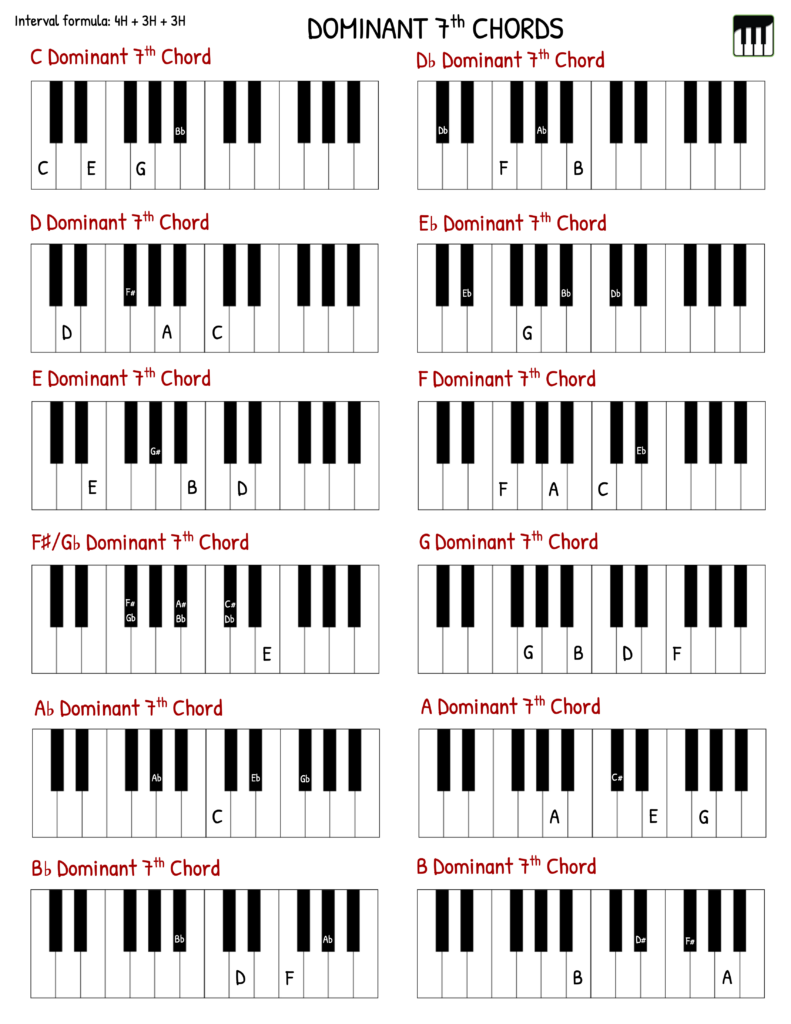
On each of the 12 keys, play the root position major 7th chord, minor 7th chord, & dominant 7th chord.
Vocabulary
• 7th chord = 4-note chord, usually scale degrees 1357, interval formula is: 4H + 3H + 4H
• major 7th chord = every other note of major scale (1357), interval formula is: 3H + 4H + 3H (opposite of major 7th chord)
• minor 7th chord = every other note of minor scale (1357), interval formula is: 4H + 3H + 3H
• dominant 7th chord = major triad + 7th note of minor scale
Essential Knowledge
• Notating 7th chords:
– Major 7th chord: Δ, M7, maj7
– Minor 7th chord: -7, m7, min7
– Dominant 7th chord: 7
Tips
• Following the pattern of dyad and triad, we might think a 4-note chord would be called a quadrad or a tetrad, but instead its name comes from the fact that it includes the 7th scale degree in addition to the triad scale degrees 135.
• Dominant 7th chords are the same as a major 7th chord with a flat 7th. If we additionally flat the 3rd, we arrive at a minor 7th chord.
• Very similar to how we’ve been replacing note letters with scale degree numbers, we can also label chords with numbers rather than note letters in order to understand chord progressions independent of any particular key. The number of each chord is the scale degree of its root. This allows us to more easily transpose between keys, and to identify patterns between the chord progressions of different songs.
